

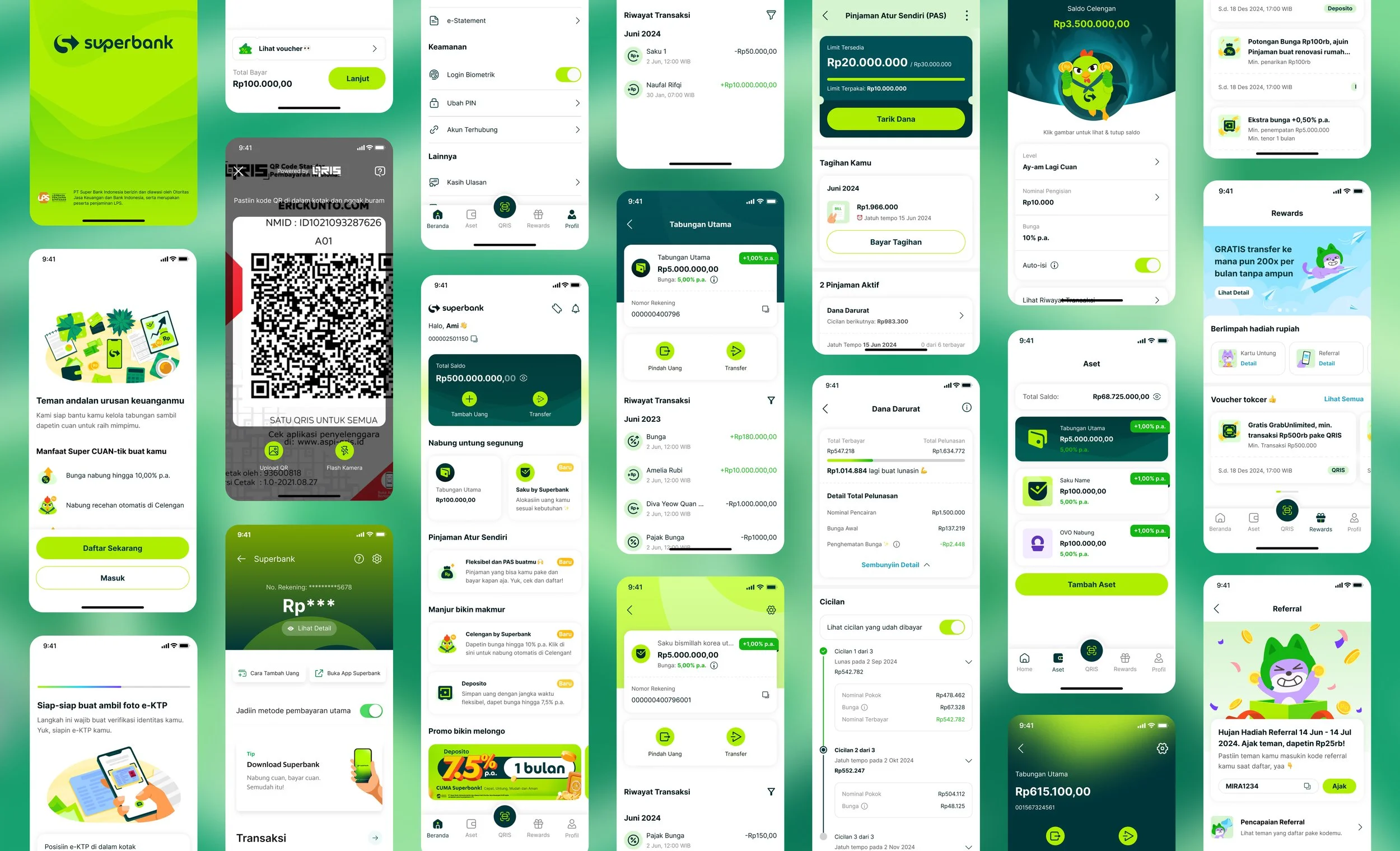
Led end-to-end design for a 0-to-1 digital bank, hitting 1M customers at 30% activation within 2 months of launch (7M by 2026) and drove a 25% lift in payment transactions in Grab services.
2022 - 2024
Grab had millions of people paying for rides and food every day, and no bank to hold their money. I led design for the bank that changed that. It reached 1 million customers in 2 months, and I took it into checkout across Grab's apps.
1 million
Customers at Launch
2 MONThS
From public launch to reach 1 million users
30%
Activation Rate
+25%
Transactions via Superbank in Grab
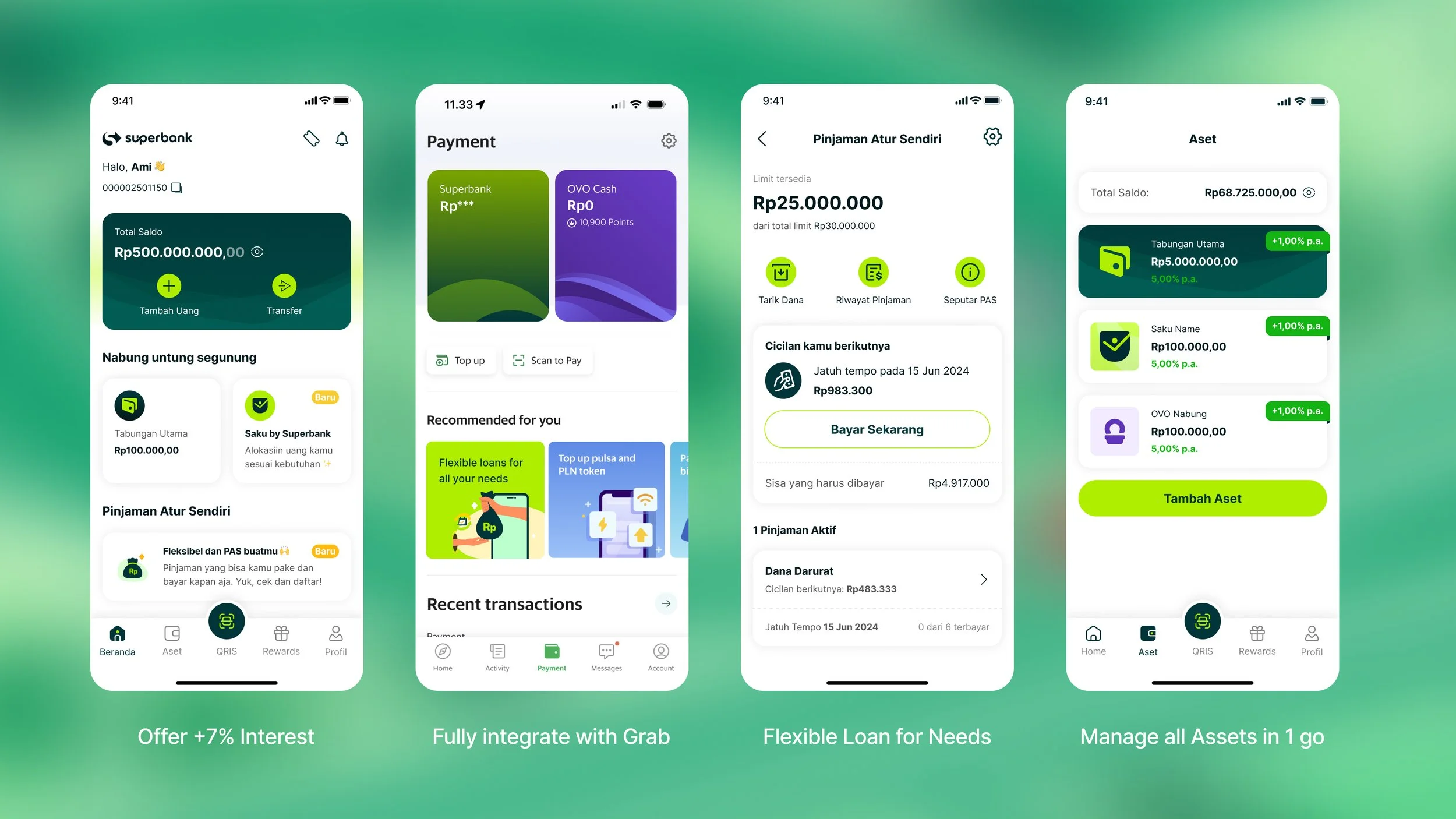
End-to-end design across payment, platform, rewards, ecosystem and lending
Product Role
Senior Product Designer in Grab Indonesia’s digital bank team
Scope
Product managers, developers and business teams from Digital Bank and Grab’s Team
Teams
3 designers, 5 product managers, 3 business end users, plus developers
Worked With
Grab had the customers, but no bank
Grab was Southeast Asia's super-app: rides, food, deliveries, and a wallet millions topped up daily. Superbank, backed by Grab, Singtel, Emtek and KakaoBank, would be its bank in Indonesia, a regulated market where most first customers had never opened a digital bank account.
Its sister digital banks, GXS in Singapore and GXB in Malaysia, were ready to launch. Superbank's core banking system and backend were still being built.
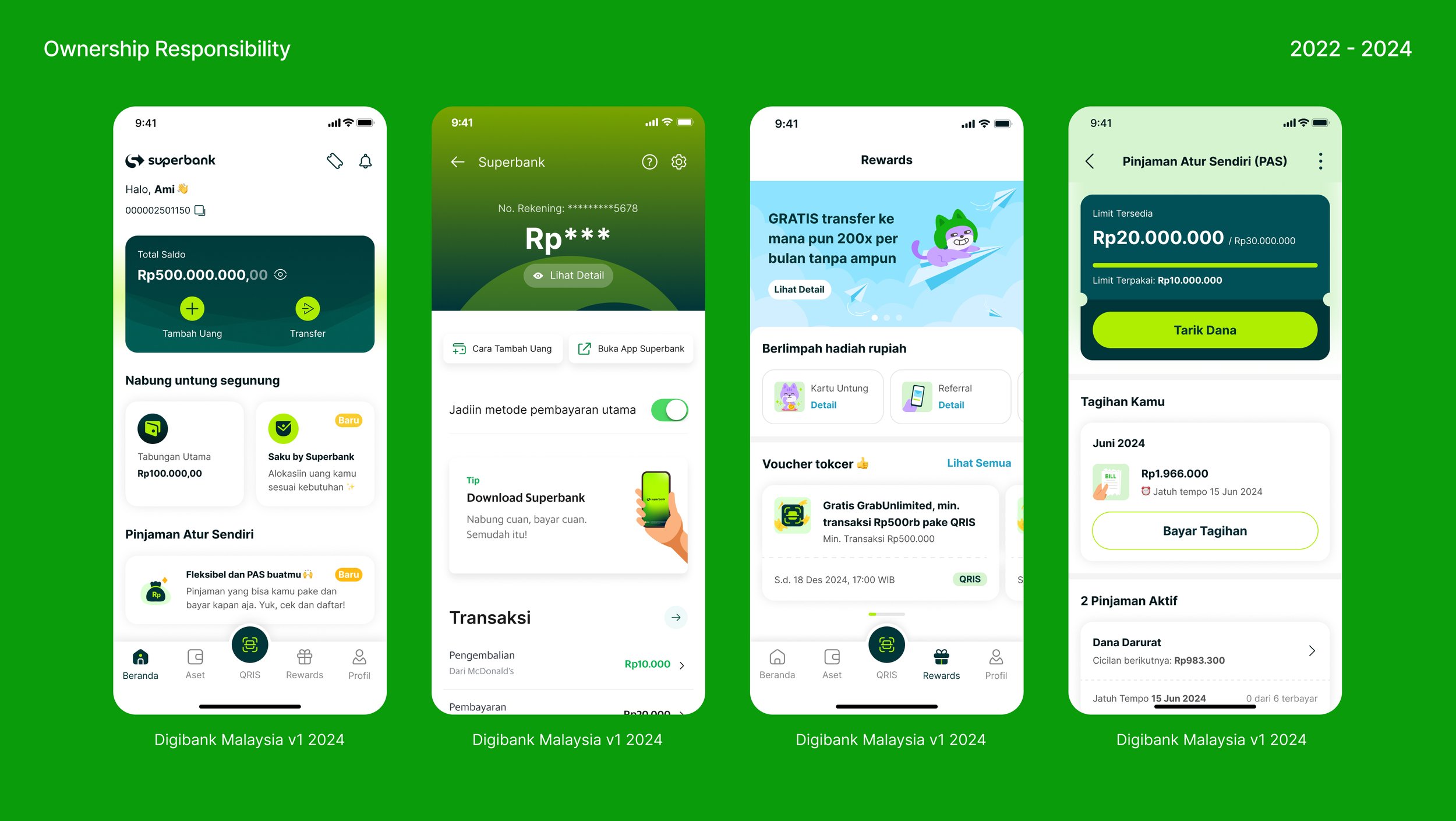
At Grab, my work was building Superbank. I was one of three designers and joined after the core journeys (onboarding, payment and deposit) were designed. I carried the work forward on lending, homescreen, identity/security, reworking finished designs as the organization's requirements changed. When the in-app payment design for Grab was about 70% complete, I was tasked to support and focus on payment integration for Superbank in Grab.
I. Banking and Loans are still inaccessible to the mass market especially for merchants who wants to grow their business and maintain savings.
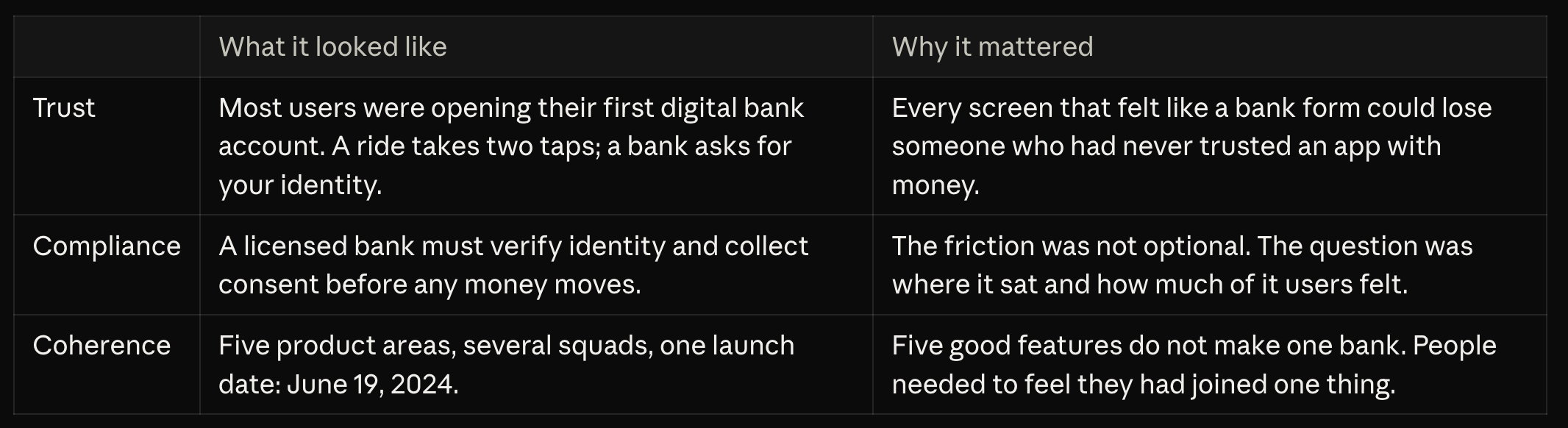
First Problem: How to make a regulated bank feel like the next tap in an app people already trusted, without hiding a single thing the regulator needed.
Second Problem: A funded account that nobody uses is a not performing account. How might we enable Superbank to show up where Grab users already paid at checkout or confirm to pay.
Third Problem: Is it possible to leverage a digital bank through Grab’s outreach in order to increase cashflow and active transactions within users in the Grab’s ecosystem that can grow businesses and even its drivers.
Challenge
Research with Grab's hustlers, the people who earn their living through the platform, surfaced three patterns:
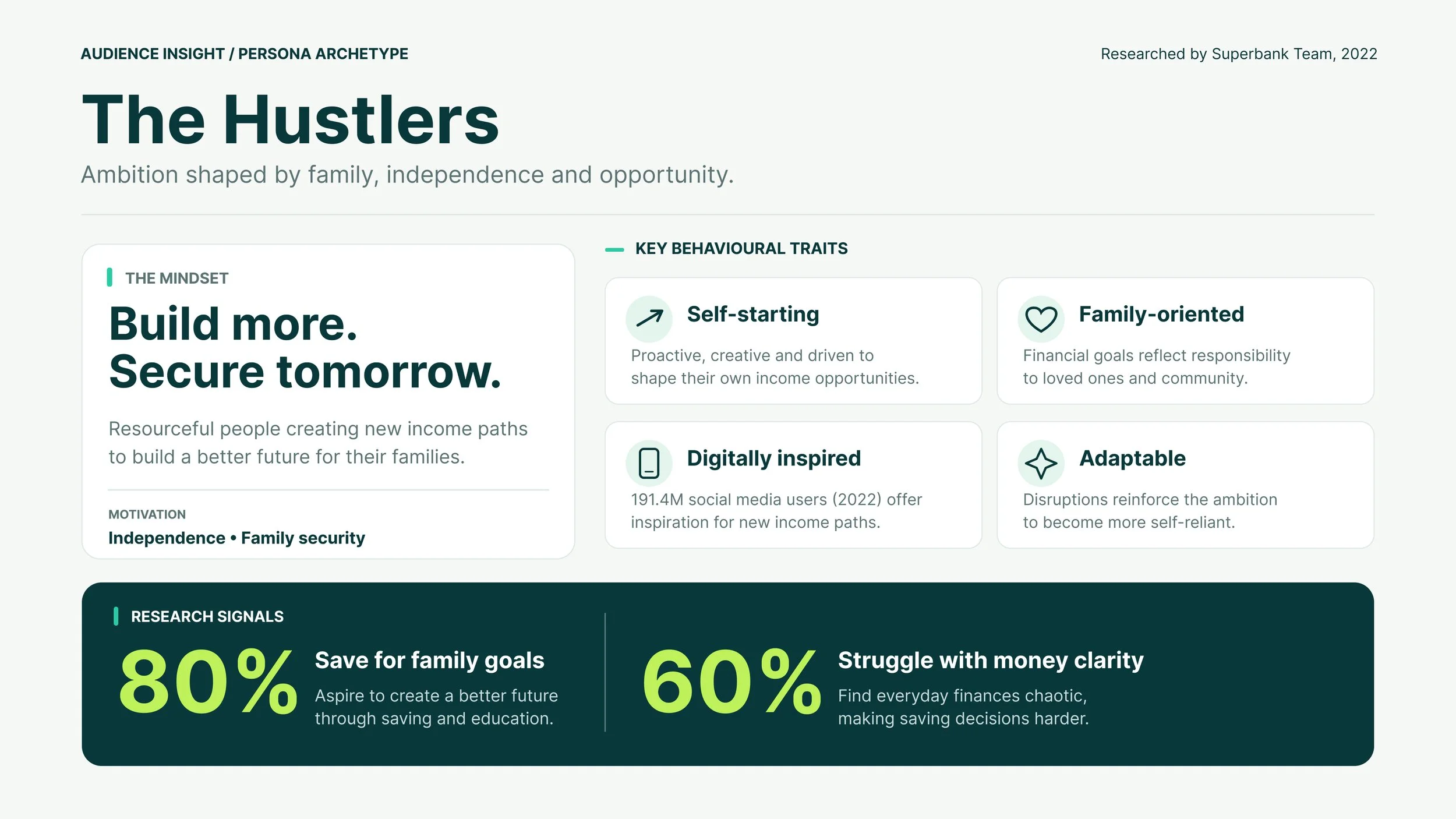
What research with hustlers told us
Research with Grab's hustlers, the people who earn their living through the platform, surfaced three patterns:
They struggle to get loans to scale and grow their business.
Their business money is mixed with personal needs.
Their income is too unpredictable to build a savings buffer.
Objective
Give hustlers a bank they could trust inside the app they already used
Meet every regulatory step without the app feeling like a bank form
Ship one coherent bank by public launch on June 19, 2024
II. Decisions that removed complexity
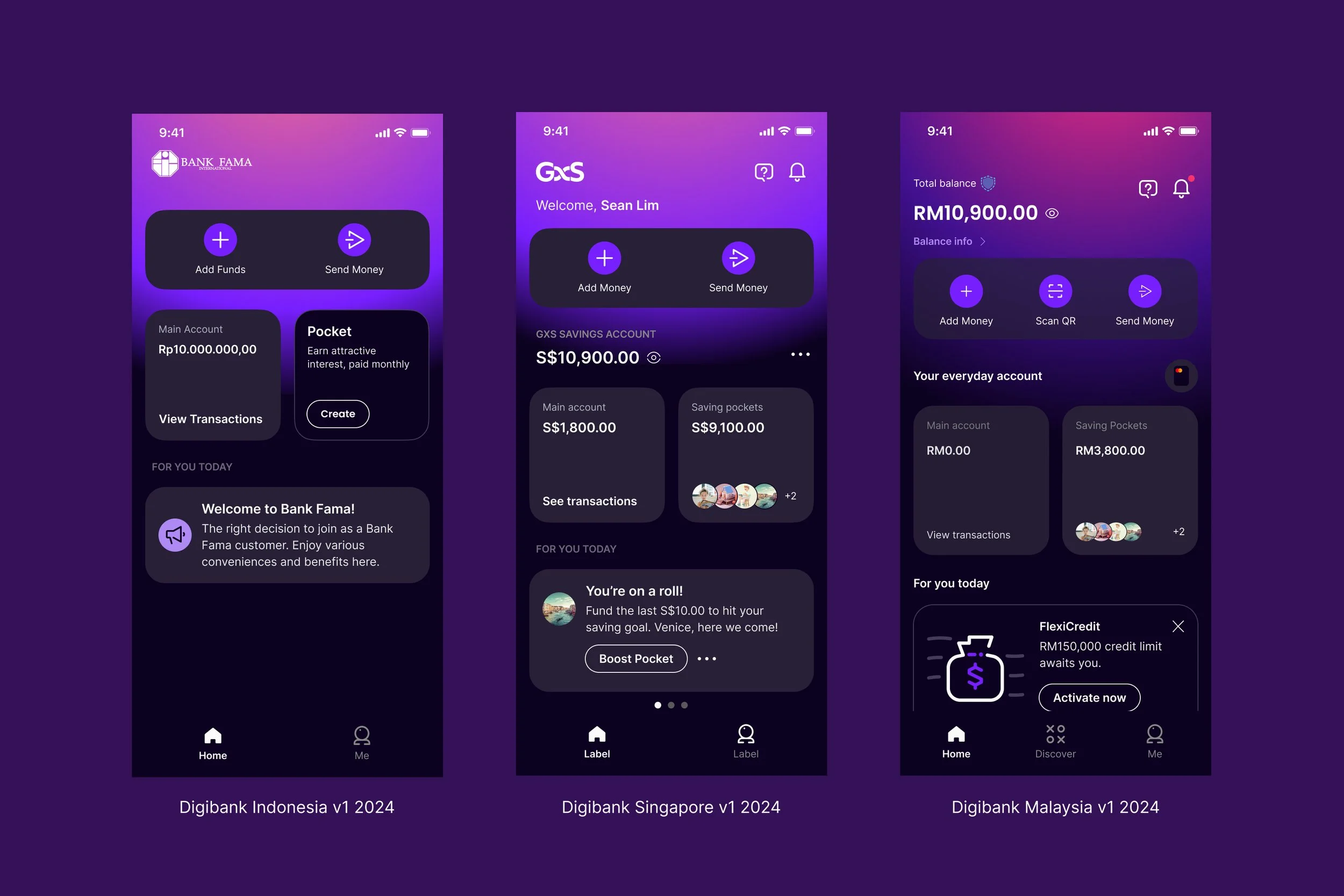
Apply the regional design system instead of building a new one
GXS and GXB already had a working design system. With Superbank's backend still in development, we built the front end on their system instead of starting from scratch. That kept the experience consistent and familiar across the three markets, and let design move while the backend was still being built. Everything carried over, from layouts to buttons. The one change was the brand color (see the pivot below).
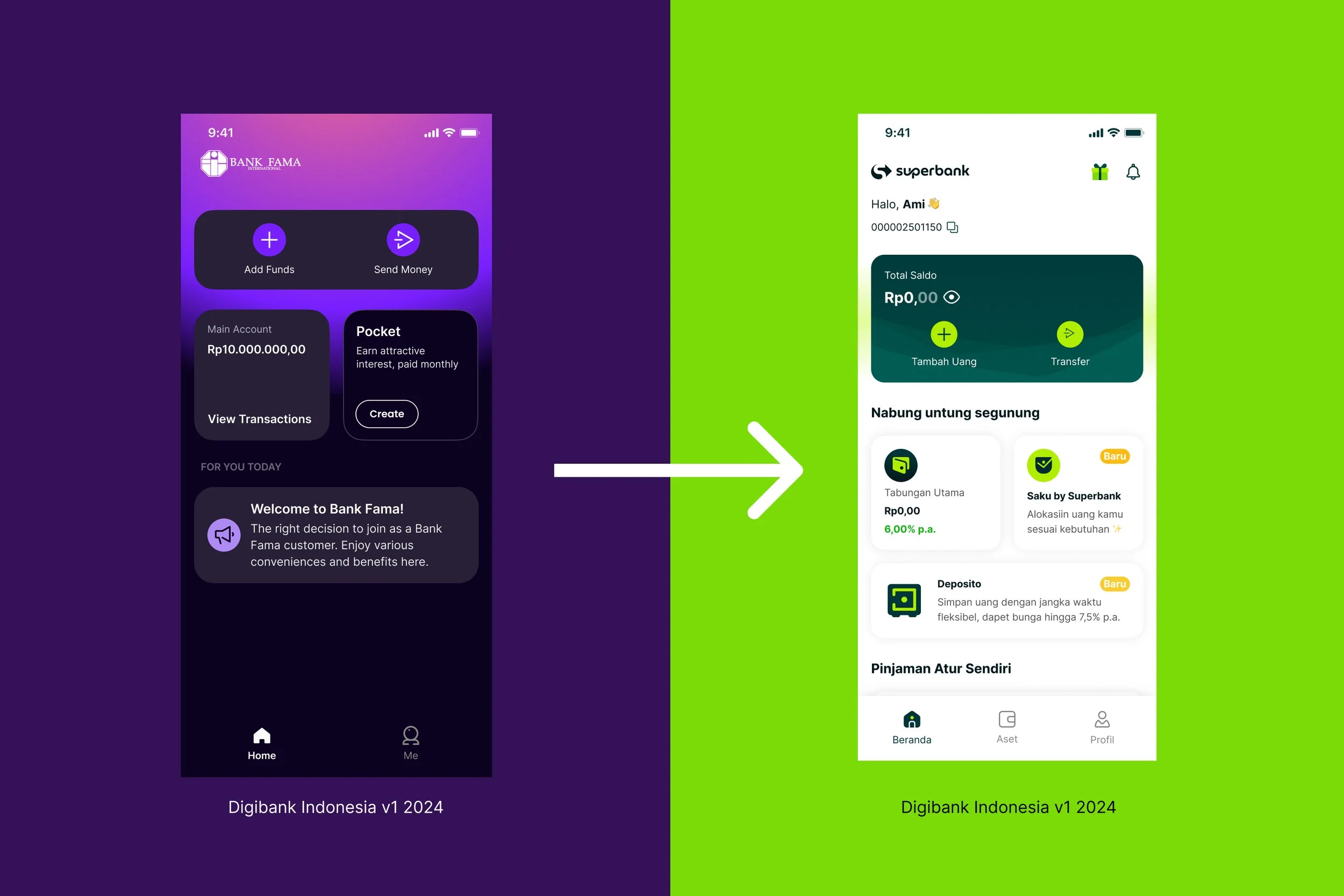
Based on research, we discovered that users easily associate with Grab’s green brand color instead of using an entirely new color. With GXS and GXB's purple, users did not connect the new bank to Grab. When we shifted to green, they recognized it as part of Grab right away and were entice to activate. Bank stakeholders made the call, and Grab agreed to accommodate it while every component and pattern stayed; only the brand color changed.
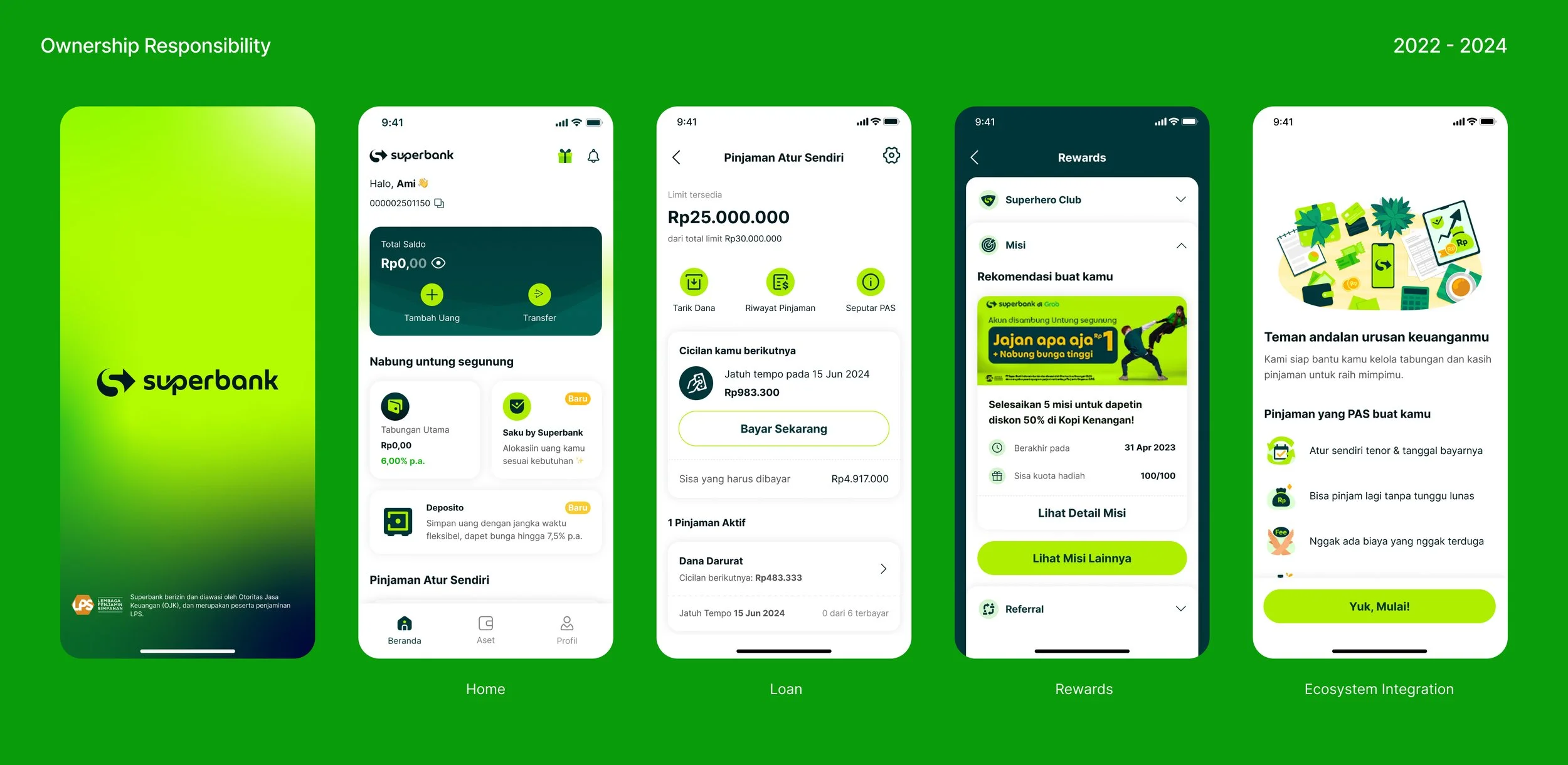
In App Experience
In preparation for the first launch experience, product and business have agreed to focus on the designs that needed to be deployed in order to make the first cut. In this case, I can emphasize more on the P1 deliverables for all features include with the products that I owned.
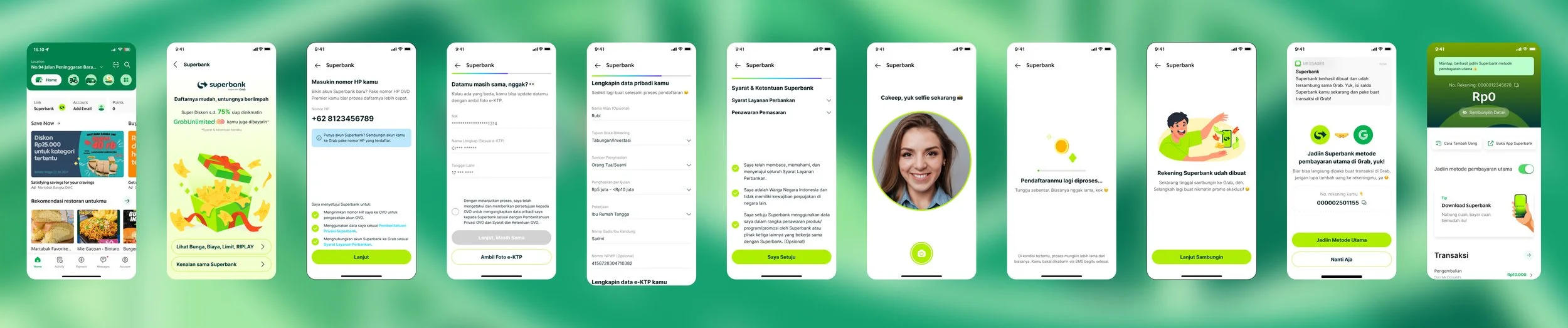
Onboarding: Using traditional ekyc via Face recognition and ID card scan
Payment: Intrabank and P2P transfers are main drivers for the first launch
Savings: Term Deposit and Topup/Fund in to pockets
Loan: Disbursement of up to Rp20.000.000 with max 12 month installments (Owned)
Rewards: Referral, Promo and Loyalty Club benefit (Owned)
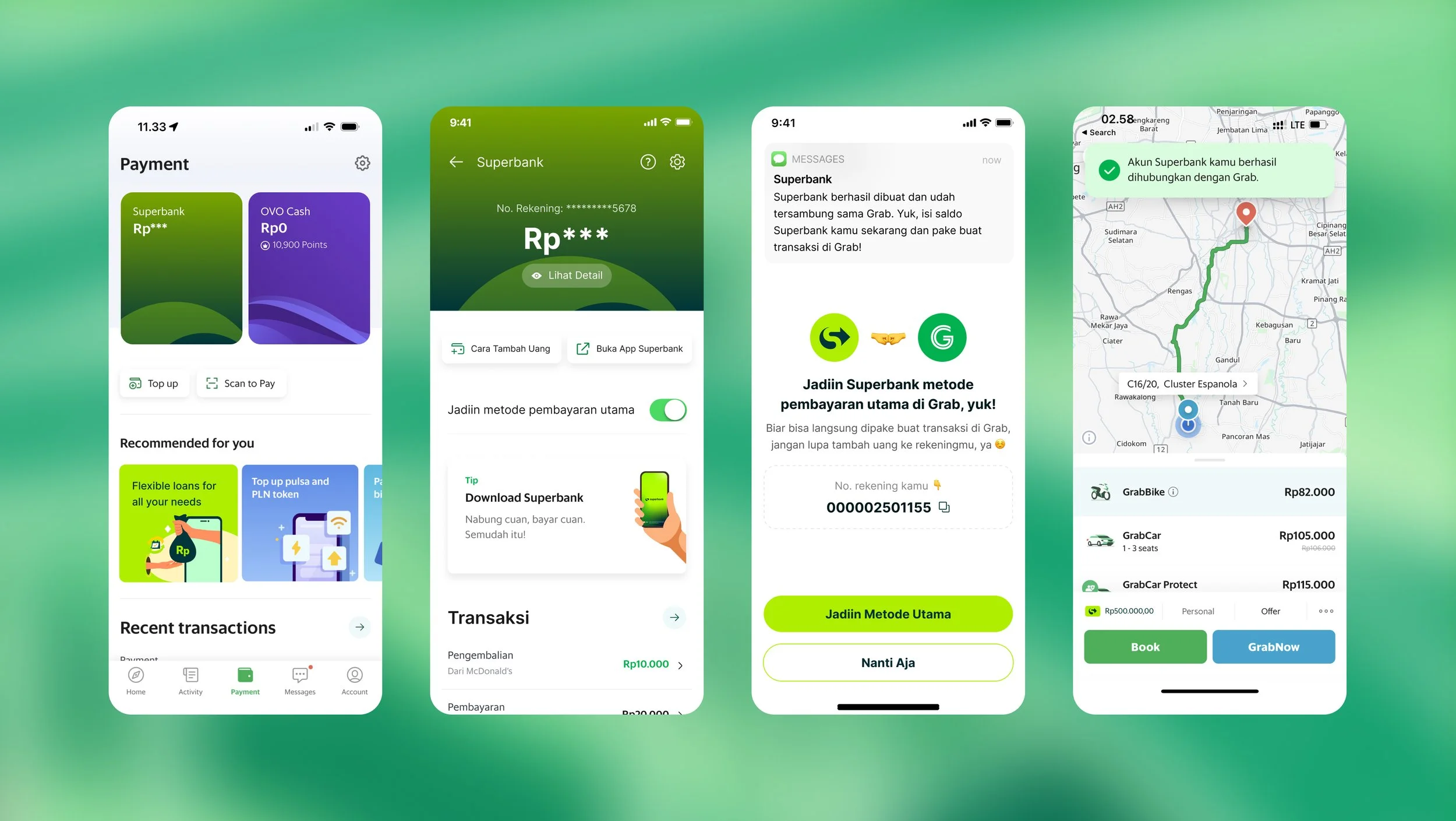
In Grab Ecosystem: Meet people at checkout, not in a new app
The integration put Superbank into the payment method list when users order food or book a ride. The hard part was not the screen. It was two product organizations, each with its own roadmap. I aligned stakeholders across both on a single sequence: Grab Finance first, then rides and food.
Grab Finance went first so the platform existed before payment spread. Users could onboard from Grab, connect Superbank to their Grab account and activate it for good. Then we distributed the journey into rides and food. User testing also simplified the transfer and payment flow. Loan offers inside Grab are ready as the next step.
III. Trade-offs of Superbank’s experience in Banking
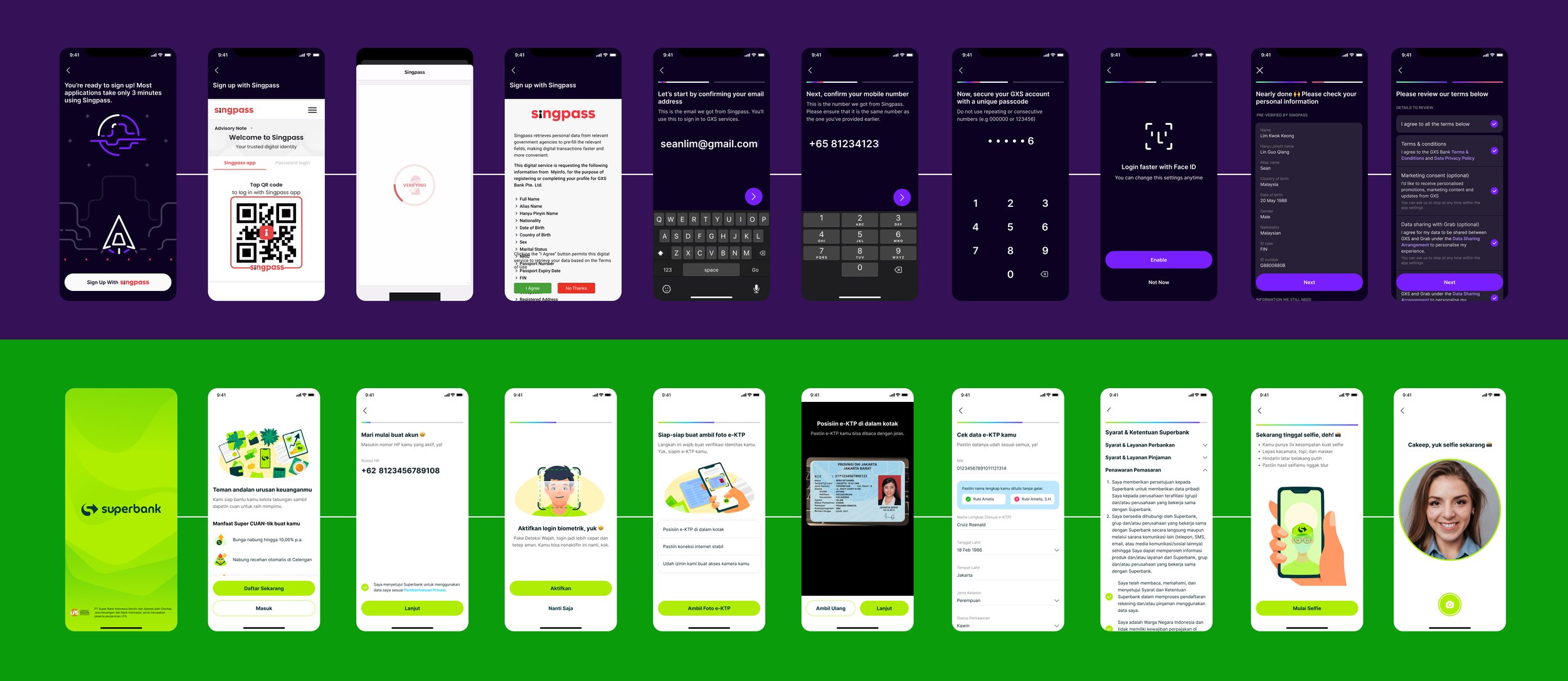
Trade off and Pivot 1
Due to ekyc technology difference, Indonesia team is unable to implement Singpass technology that enables users to register less than 3 minutes.
Our onboarding experience is heavily regulated with rigorous restrictions in data inputs. We then require to implement Face recognition and ID card data reading as part of the ekyc process, while also require user to go through writing down their forms. However, through this trade off what we can do to fix the issues is through minimizing the required fields for users and move all the Identification check from phone, email and ID in the beginning; making the confirmation at the end shorter. This way, user have the energy to check and review in the beginning rather than later.
What are we solving?
We minimize the required input fields for users to complete registration account in the midst of unable to deduct the number of steps required to complete. We are also solving complexity and technical issues that occur for customers that have limited access with connection to the internet and also being as clear and concise as possible for those who never been familiar with long process registrations.
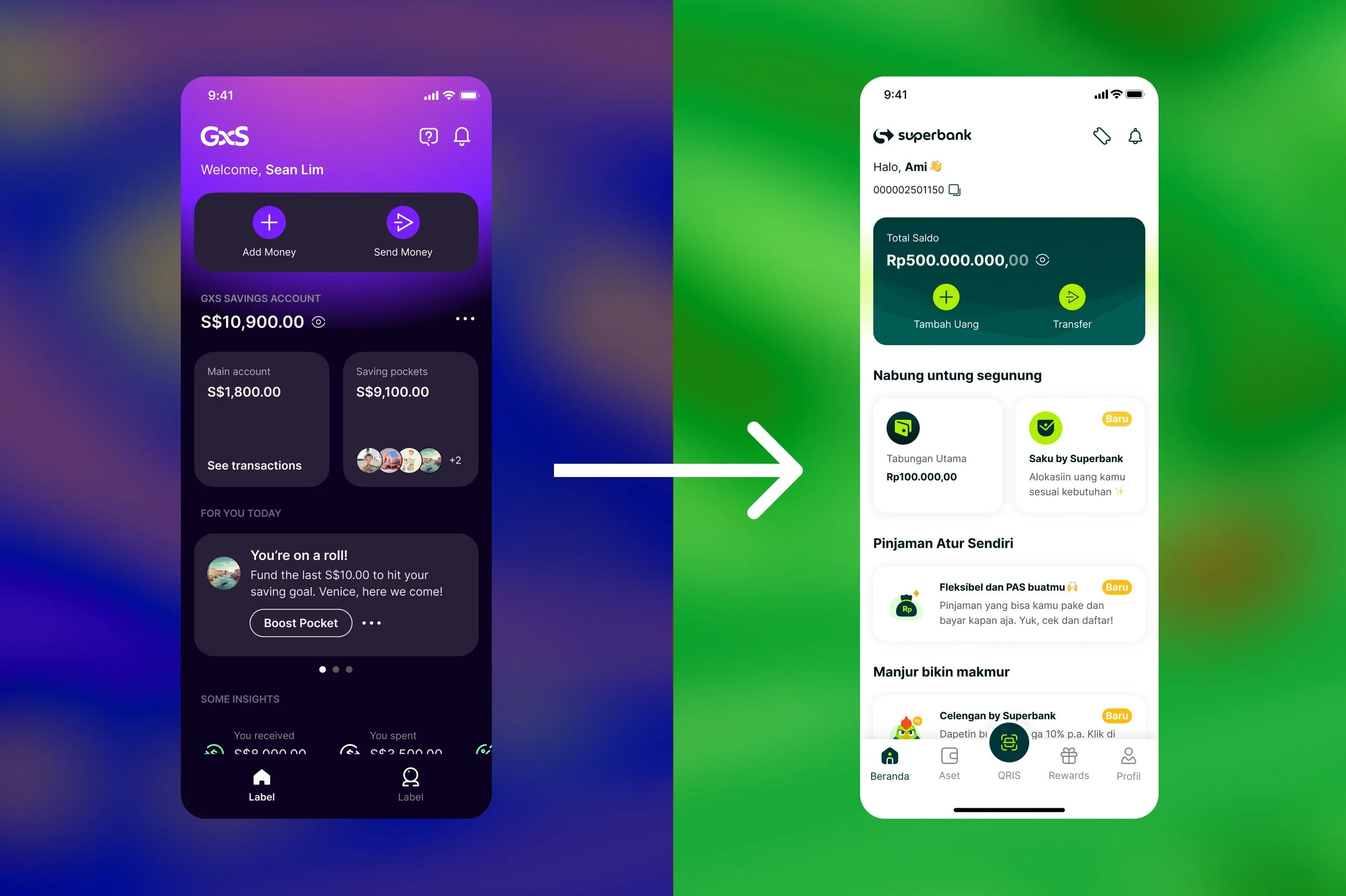
Trade off and Pivot 2
We restructure the homescreen to cater behaviour needs first for the Indonesian market.
Redesigning the layout of homescreen to cater Indonesia market and behavior approach in order to successfully drive activation and engagement metrics. One of the crucial things that we needed to emphasize is using visual card shape on top area to highlight nominal amount of cash users owned since familiarity in market can bring trust inviting users into Superbank. We also moved the QRIS button from the top to the navigation bar as most Indonesian users are one handed users who needs to scan quickly to get things done. Finally, we also focused on product offering first in below the fold section to show products that users can enjoy and use in Superbank as we try to have a readability focused structure into the design.
What are we solving?
We are solving user behaviour habits that has already been established long enough. Its quiet a high risk to lose engagement if the design were to be different than the Singapore and Malaysia counterpart. With that being said, it created a new design system branch for the long run but we are still able to maintain its consistency route.
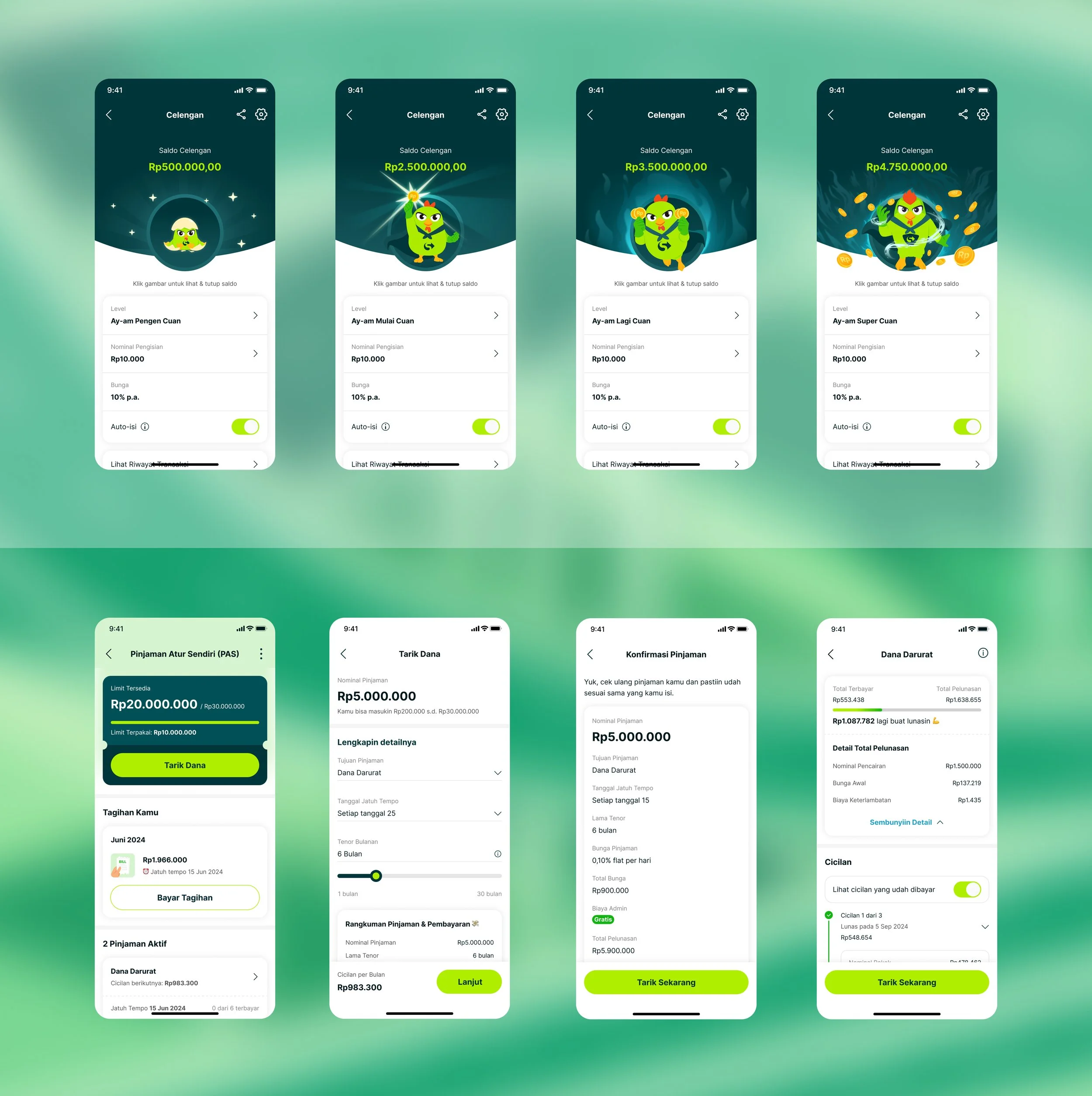
Trade off and Pivot 3
We focused on growth features, Celengan and Loan are the forefront of increasing activation and retention in order to have a USP and full running cashflow in the bank
At first Superbank decided to focus on launching only payment and deposit features as the initial service offer for new customers. However, from product end we believed that creating the right first impression and a clear cut unique selling proposition can attract and boost users to have a reason to start saving and funding in Superbank. Not to mention, Superbank forecasts to project Rp 3 Billion by 2024-2025 and thus needed revenue coming in.
To attract users, we developed celengan as a way to introduce non financial savy users with the importance and benefits of savings but also growing wealth. While we also pursue to push loan as a revenue generator by interests by capturing majority merchant users so they can use Superbank to fund their business needs going forward.
Trade off and Pivot 4
Superbank integration for Grab prioritise in account linking first before proceeding to show wallet in Grab Ride and Grab Food.
Based on timeline it turns out the effort that requires to fully implement Superbank source of fund in Grabfood and Grabride would take up more time exceeding the planned launch date. Therefore, we split into 2 phases couple of months back to ensure that once grand launch has begun, developers can straight away take action in developing the source of fund feature. Phase 1 focuses on account activation first where we are aiming to achieve target for users who opened superbank account from Grab and also users who fund in via Grabfin. The challenge on this part is mapping out touchpoints and we’d figure to highlight them in the Grab main page and also the above the fold marketing banners to ensure high visibility for users to apply.
IV. Results: people trusted it, used it, and paid with it
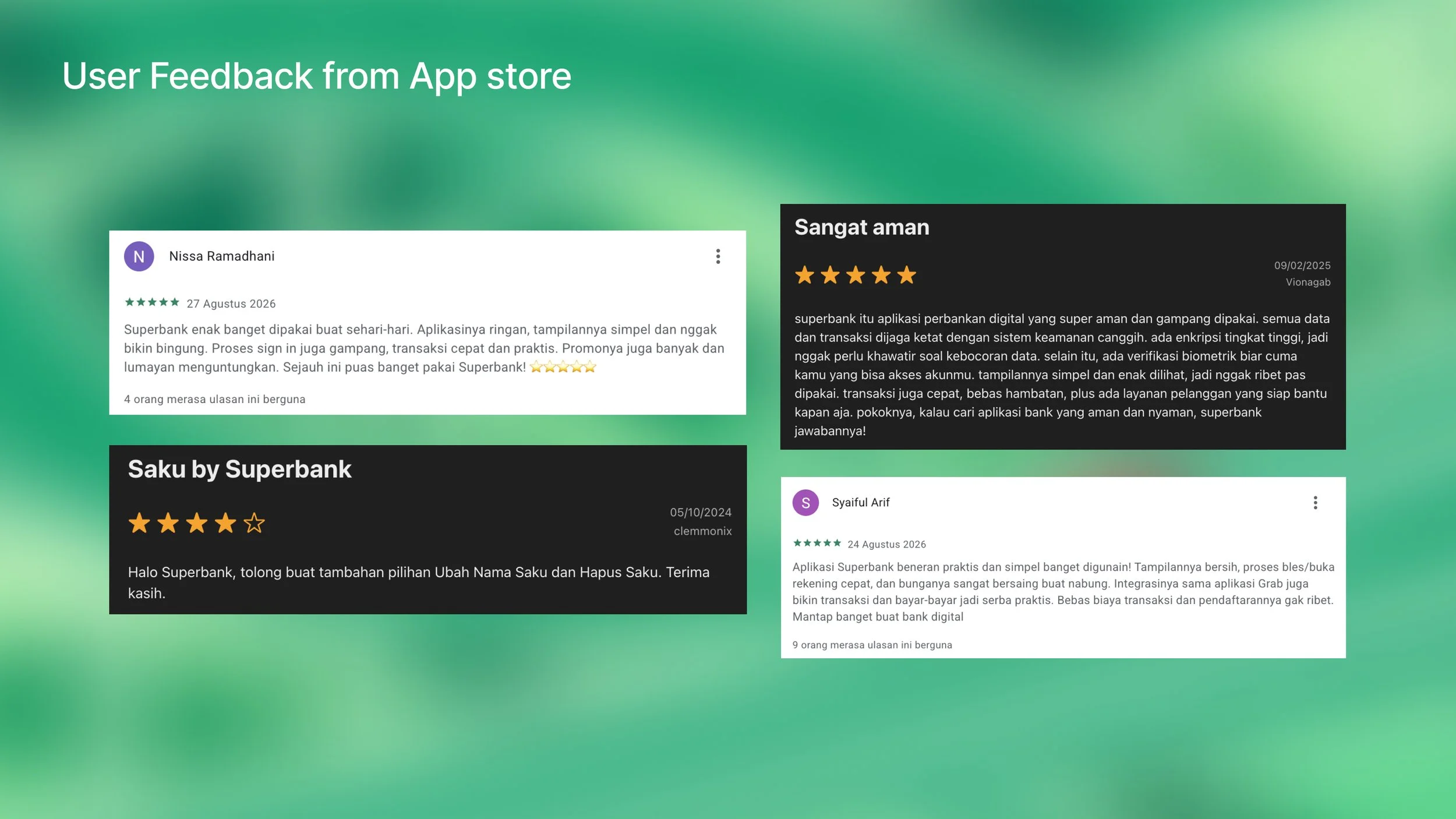
Trust: 1 million customers in 2 months. People trusted a new bank from an existing ecosystem.
Activation: a 30% activation rate. Nearly 1 in 3 went past sign-up to an active account.
Habit: payment transactions up 25% once Superbank sat at checkout in Grab Ride and Food.
Progress: Superbank has since grown to 7 million users.
What I carried forward
Building a bank from zero is a different job from improving one. At BRI, the core banking system already existed and design worked on top of it. At Superbank, the core banking system, the Grab integration and the design were all being built at the same time, so design had to work around what the backend could support at each stage.
Things that I would do differently when we wanted to launch the first version is to set boundaries and expectations of what to deliver and not to deliver. Yes while we are moving at high speed to ensure everything is launched quickly, all design deliverables are cluttered and unable to track the latest version. Our struggles were that we did not track and keep design consistencies in check while running the sprint. Actions that can be handled properly in here is to ensure expectations are managed between Product and Stakeholders, but on the other hand design team can build the design components and rigorous documentation intensively in the beginning so that in the long run; we can continously improve and implement the right experience.